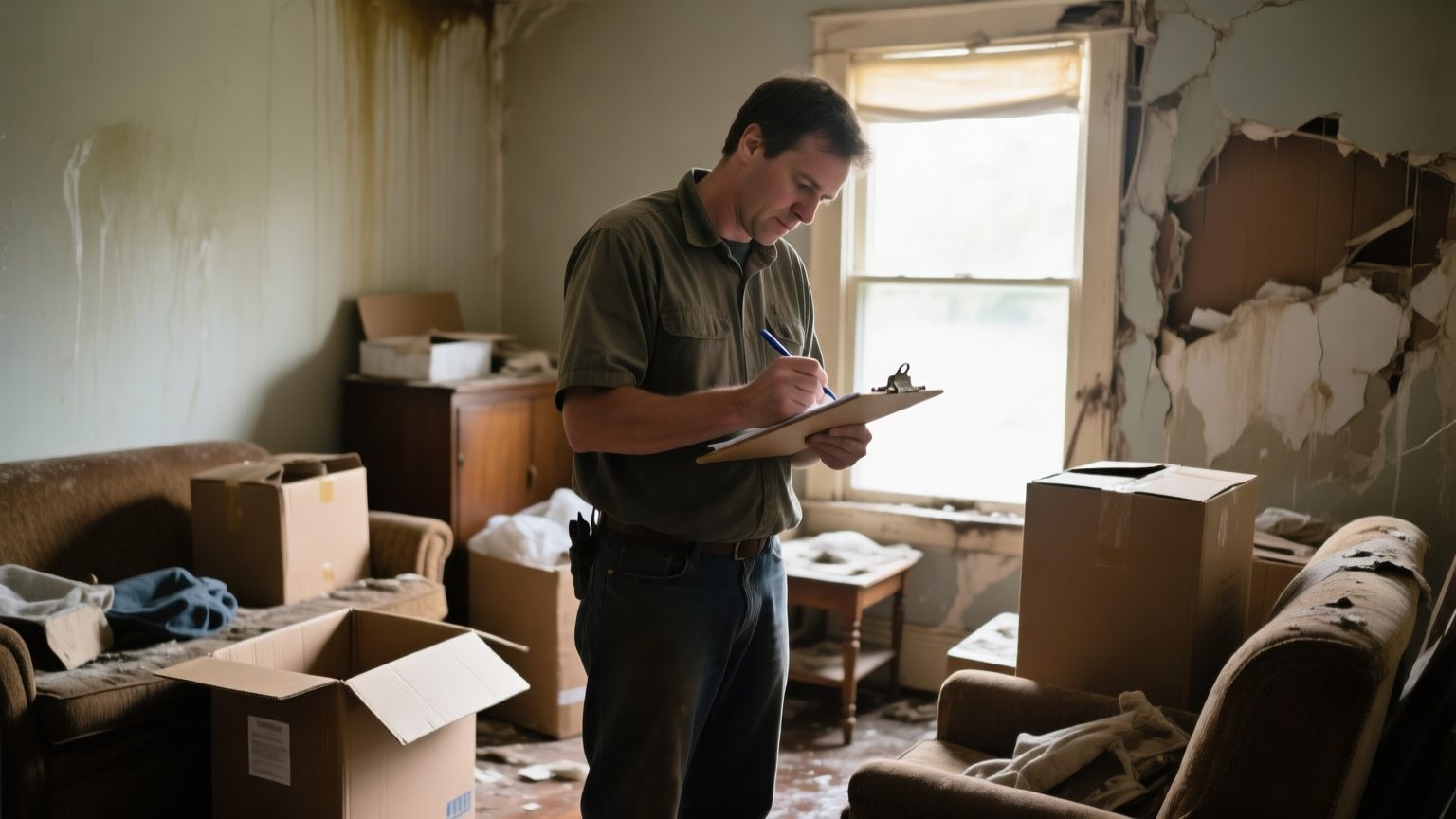
Why prolonged water exposure changes the contents decision
A quick, clean-water spill is a different loss from standing water that sat for days. Two factors drive what happens to belongings: the porosity of the material and the time and contamination of the exposure. Restoration guidance built on IICRC standards categorizes water by contamination, from clean, to gray, to grossly contaminated black water from sewage or flooding, as breakdowns like this overview of water damage categories describe. The longer contents sit wet, the further the loss migrates toward the contaminated end, and the more the mold risk rises. Common industry timelines put the shift from clean toward gray conditions around 24 to 48 hours, with mold colonization risk escalating sharply past roughly 72 hours.
For a contents claim, this matters because the restorability decision determines how each item is treated on the file. An item that can be professionally cleaned becomes a restoration cost. An item that cannot be safely restored becomes a replacement line valued at its replacement cost. Getting that split right, item by item, is the core of documenting a prolonged-water loss, and it is a close cousin of the restorable-versus-not decision covered in non-restorable vs restorable contents and how the list is decided.
Porous versus non-porous: the line that decides most items
The single most useful distinction is porosity, because it maps closely onto what can and cannot be safely restored after contaminated or prolonged exposure.
| Material type | Examples | Typical outcome after prolonged or contaminated exposure |
|---|---|---|
| Porous | Upholstered furniture, mattresses, clothing, books, paper, particleboard | Often non-restorable when exposed to contaminated water; treated as a replacement line |
| Semi-porous | Unsealed wood, some leather, certain finishes | Case by case; depends on exposure time, contamination, and treatment |
| Non-porous | Metal, glass, ceramic, sealed hardwood, hard plastics | Often cleanable and retained with professional treatment |
Industry sources on category 3 water damage are consistent that porous materials which contacted grossly contaminated water are generally removed and discarded under IICRC and public health guidance, because they absorb contaminants too deeply to fully decontaminate. Non-porous materials can usually be cleaned and disinfected. Semi-porous items are the judgment zone, and they are exactly where a professional call is needed rather than a rule.
The one exception: irreplaceable items
Pure cost logic says restore an item only when cleaning costs less than replacing it. Irreplaceable belongings break that rule. Documents, photographs, heirlooms, and archival materials can justify restoration effort beyond a simple cost ratio, because replacement is not possible at any price. These items should be flagged for specialized restoration consideration and documented carefully, since their value on a claim is not captured by a standard replacement cost. The decision to attempt specialized restoration is one for a restoration professional, not a spreadsheet.
What to document for each item
Whether an item is cleaned or replaced, the claim needs a record a reviewer can follow. For a prolonged-water loss, each item should carry the material type and porosity, the exposure it saw, the restorability decision and who made it, and either the restoration approach or a replacement cost value with its source. Photographs matter here because much of the damage, like the invisible residues in a smoke and soot claim, is not obvious in a single image, so the documentation has to explain why an item is non-restorable, not just assert it. The same room-by-room discipline that structures a standard water loss contents file applies, with the added porosity and exposure detail that mold risk demands.
How Contensure helps, and where restoration pros decide
Contensure supports the documentation and valuation side of a prolonged-water loss. It can structure the inventory from photos and lists, draft a specific description for each item, note likely material and porosity to support the restorable-or-replace triage, and, for items treated as replacements, draft a replacement cost value with the source and comparable evidence attached. That turns a chaotic pile of wet belongings into an organized, review-ready file faster than manual research allows.
What Contensure does not do is make the restorability call or perform the remediation. Whether an item is safe to restore after contaminated or prolonged exposure is a professional judgment governed by IICRC and public health guidance, and it belongs to the restoration team and adjuster on the loss. Contensure complements packout and restoration workflows rather than replacing them: the crew and the professionals decide what is restorable, and Contensure documents the decision and values the replacements with evidence, with your team reviewing and signing off before anything is final. It is not a public adjuster and does not negotiate claims. Because a prolonged-water file involves photos and claim data, how Contensure handles security is part of keeping it credible.
The valuation on every replacement line follows the fundamentals of what replacement cost value means, and where the loss also involves fire or smoke, the standards in documenting contents after a fire apply alongside these. Your policy language governs how and when RCV is paid. For more on defensible contents documentation, see the Contensure blog, or talk to Contensure. Before disposing of anything, consult a restoration professional about what may be salvageable.