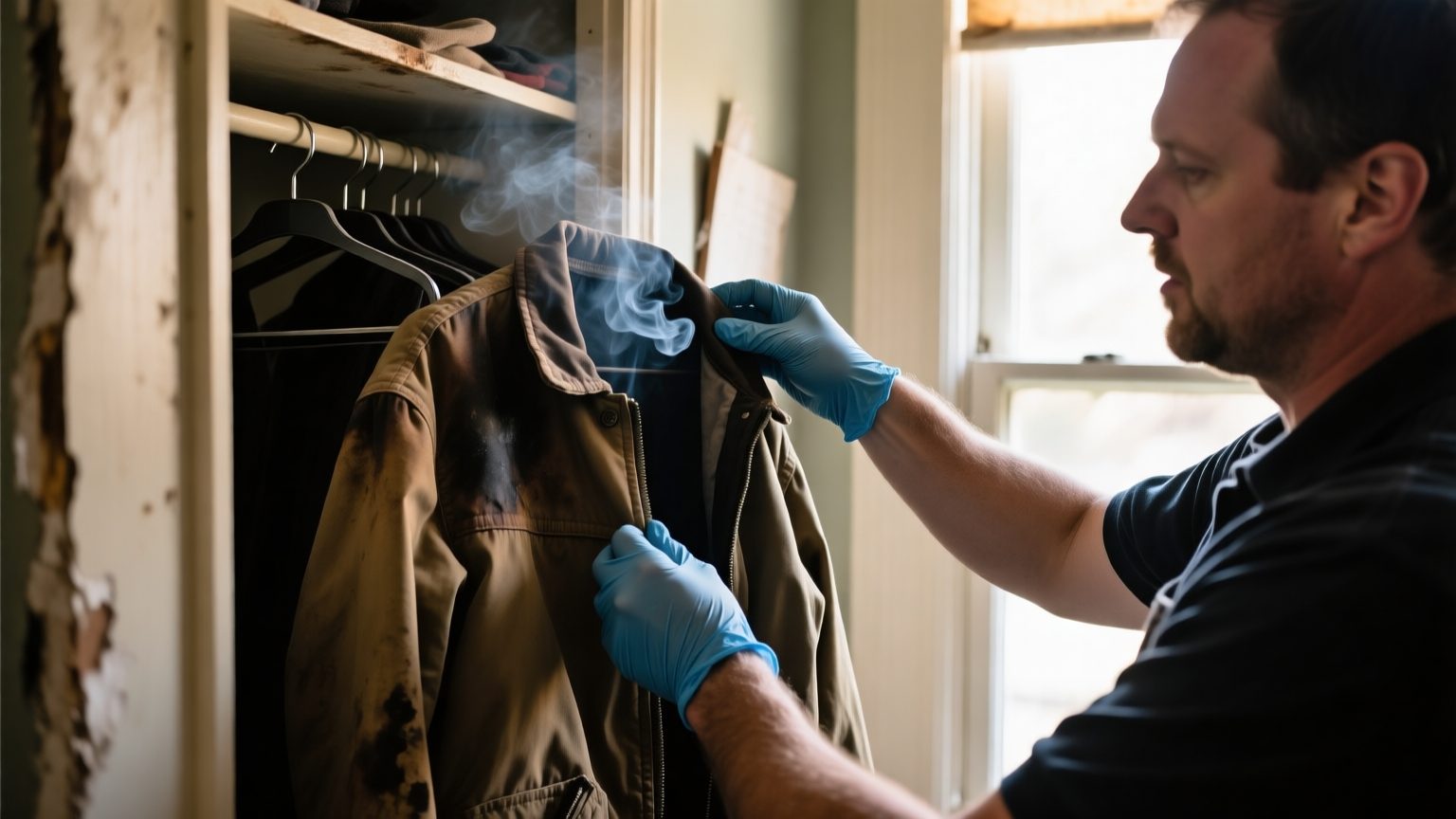
Fire is easy to photograph. Smoke and soot are not. A closet of clothing can look untouched and still hold odor and chemical residue that makes it unwearable, while a television with no visible marks can carry soot on its internal boards that shortens its life. That gap between what a photo shows and what actually happened is where smoke and soot contents claims stall. The documentation problem is not proving the fire happened. It is proving, item by item, why something that looks fine is not, and attaching a defensible value to it.
Why smoke and soot damage is hard to document
Smoke and soot travel further than flame and settle into materials that do not show it. They penetrate porous items such as upholstered furniture, mattresses, clothing, and bedding, leaving odor and chemical contamination that a camera cannot capture. On hard surfaces and electronics, fine soot can coat interior components while the exterior looks clean. Protein soot from a kitchen fire is nearly invisible and carries a strong odor that ordinary cleaning does not remove.
This is why a stack of photos alone rarely carries a smoke claim. The reviewer looking at the file cannot smell the sofa or open the television. The record has to translate a sensory, physical condition into written evidence: what the item is, how it was exposed, what a professional determined about restoring it, and what it costs to replace if restoration is not viable. Building that record for a whole household, where every room holds affected items, is the part that takes days by hand.
Restoration or replacement: the determination that drives the value
The central question on almost every smoke and soot item is whether it can be cleaned back to a safe, usable condition or whether it needs to be replaced. That determination is a professional judgment, not a guess, and it belongs to the restoration technician who inspects the item against recognized standards. The IICRC maintains the industry standard for fire and smoke damage restoration, and a documented restorability call carries far more weight in review than an opinion.
Some categories fall outside practical restorability and generally point to replacement, while others are often recoverable through professional cleaning. Documentation should record which path applies and why for each item.
| Item type | Common determination | What to document |
|---|---|---|
| Upholstered furniture, mattresses | Cleanable in some cases, replace when saturation or odor remains | Material, exposure, cleaning result or restorability call |
| Clothing, linens, bedding | Often cleanable, replace when odor or staining persists | Category counts, condition after attempted cleaning |
| Electronics exposed to soot | Replacement often the more defensible choice | Make and model, soot exposure, safety and conductivity risk |
| Charred, melted, or heavily saturated items | Generally non-restorable | Photos of visible damage, description, replacement cost |
Whether the policy pays to clean, to replace, or a combination is a coverage question, and your policy language governs how that is handled. The documentation job is the same either way: make the condition and the determination legible so the value attached to each item can be reviewed and accepted.
What a smoke and soot contents file needs on each item
A file that holds up in carrier review pairs every affected item with enough context that the reviewer does not have to fill gaps with assumptions. For a smoke and soot claim, that means:
- A specific item description, including brand and model where known, not just "jacket" or "TV."
- The exposure and condition: where the item was, how smoke or soot reached it, and its state after any attempted cleaning.
- The restorability determination from the restoration professional, cleaned or non-restorable, with the reason.
- A replacement cost value for items being replaced, with the source the price came from.
- Ownership and pre-loss evidence where available, such as a photo, receipt, or purchase record, the kind of detail a home inventory captures before a loss.
The pattern is the same one that makes any contents claim reviewable: a value that carries a source, a description, and a reason is easy to accept, while a bare number invites a cut. The evidence discipline behind that is covered in what replacement cost value (RCV) means, and the broader fire documentation workflow is in how to document contents after a fire.
Where Contensure fits, and where the restoration professional stays in control
Contensure is AI-powered contents claim valuation and documentation that turns messy inputs, photos, item lists, and claim files, into review-ready item descriptions and replacement cost values with the evidence attached. On a smoke and soot loss, it identifies and describes items, drafts replacement cost values with the source behind each one, and structures the whole inventory so nothing is missed across a house full of affected rooms. It handles the documentation and valuation side and routes everything through a professional review queue.
It does not decide whether an item is restorable, and it is not a substitute for the restoration technician's judgment or the professional cleaning workflow. The restorability determination stays with the qualified professional, and Contensure complements that packout and restoration work rather than replacing it. AI drafts the descriptions and values, and your team reviews and signs off before anything is final. Because a smoke claim involves photos and claim files that carry sensitive detail, how that data is handled matters, which is covered in how Contensure handles security.
Why this matters on a high-volume desk
A single smoke claim is tedious. A desk of them is a bottleneck. When smoke touches every room and every closet, the item count climbs into the thousands, and each one needs a description, a condition note, and a value with evidence. Doing that by hand is what turns a claim into a multi-day back-office job. Structuring the inventory and drafting the valued, evidenced line items is where AI removes the manual hours, so professionals spend their time on the restorability calls and the review, not on typing. More examples and answers are on the Contensure blog, and teams that want to talk through a specific large loss can talk to Contensure.