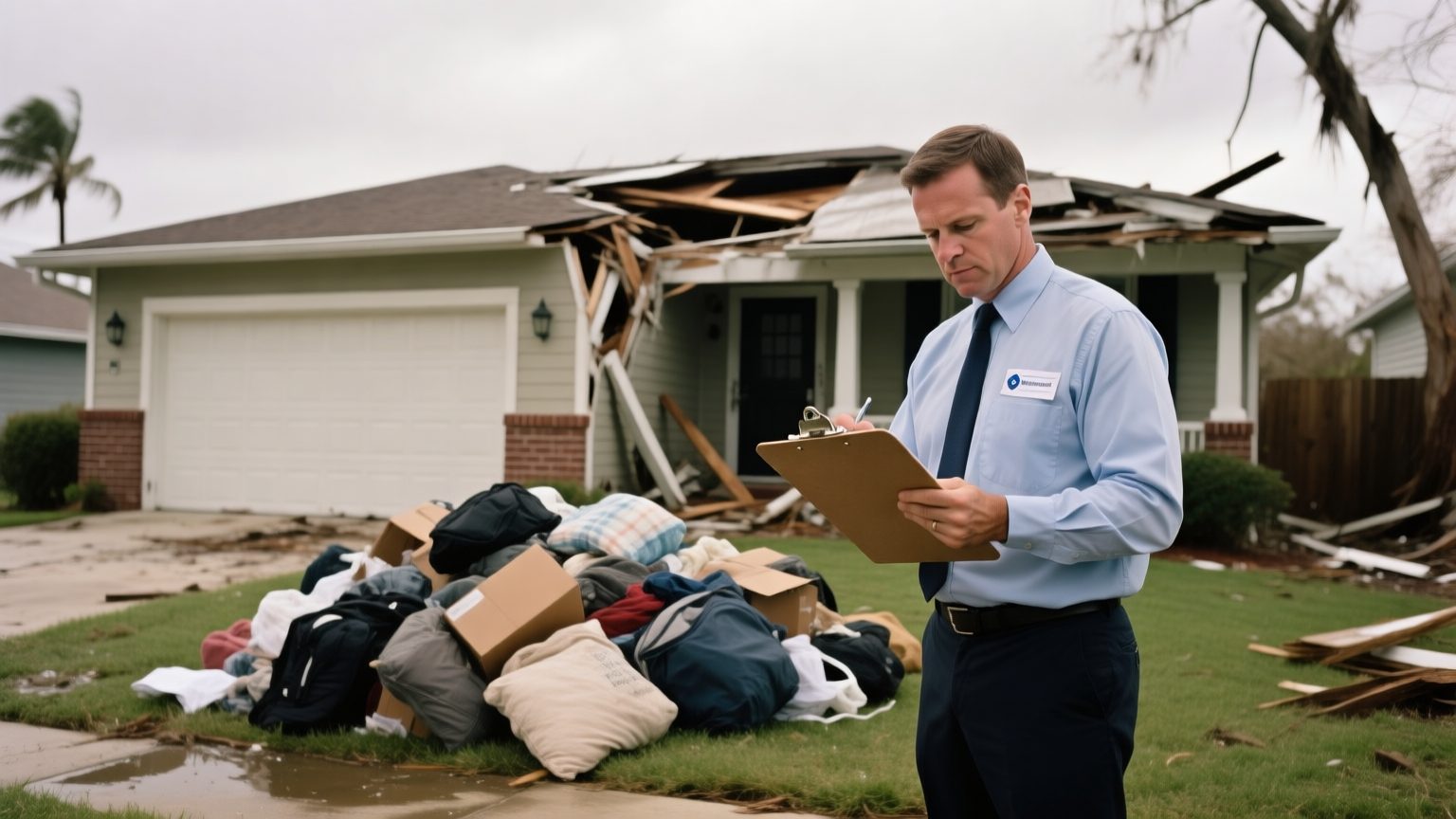
A single contents claim is a project. A hurricane that damages twenty, fifty, or two hundred properties at once is a different problem entirely. The work does not get harder per item, it gets harder because the same work repeats across many files, on a compressed timeline, while carriers deploy catastrophe teams that prioritize fast closure. For a high-volume public adjuster or a restoration operations manager, the claims that settle cleanly are the ones documented consistently and processed in parallel. Here is how to run contents at that scale.
Why multiple-property hurricane claims break normal process
Three things change at portfolio scale. Volume overwhelms a per-item manual process: researching replacement costs one browser tab at a time does not survive contact with a thousand items across ten homes. Consistency breaks when different people document different properties in different ways, so one file is review-ready and the next is a mess. And the clock is tighter, because catastrophe adjusters are pushed toward quick closures, which means an incomplete or inconsistent file is more likely to be marked down or delayed. The failure mode is almost never a single hard item. It is the same easy work, unmanaged, multiplied.
The coverage split you have to document around
Hurricane damage is where coverage gets divided, and the documentation has to respect that. Wind damage is generally covered by a homeowners or windstorm policy, while flood damage is generally excluded and covered, if at all, under a separate flood policy such as the National Flood Insurance Program. The Insurance Information Institute is explicit that flood is not part of a standard homeowners policy, in its flood insurance facts. Whether water entered from a wind-damaged roof or rose from the ground can decide which policy responds, and that determination has a long history of dispute, examined in a federal GAO report on wind and flood damage determinations.
For contents specifically, this matters because the same room may hold wind-damaged items and flood-damaged items that sit under different policies with different limits. NFIP contents coverage, where it applies, is capped separately from building coverage. You do not adjudicate the coverage question, and none of this is legal or insurance advice, but your documentation should make the cause and location of each item's damage clear so the right policy can be applied. The cause-and-condition detail that supports this is the same discipline used to document contents after any major loss.
Standardize documentation across every property
At portfolio scale, consistency is the single highest-leverage move. Every property should be documented to the same template: the same fields per item, the same photo standards, the same way of recording age, condition, and the source behind each value. When files are built the same way, a reviewer learns your format once and moves faster through all of them, and your own team can hand work off without a property stalling because one person documented it differently. Keeping documentation consistent when several people work a large loss is its own skill, covered in keeping contents documentation consistent across multiple adjusters. The replacement cost value itself follows the same RCV standard on every property.
Process inventories in parallel, not in sequence
The last shift is throughput. A portfolio of properties cannot be worked one finished file at a time if the deadline is shared. The work has to run in parallel: intake all properties, triage the largest and most time-sensitive first, and draft valuations across the whole set rather than finishing one home before starting the next. The catastrophe-scale version of this workflow, and how to clear a large inventory without a backlog, is laid out in processing a 2,000-item inventory after a catastrophe. More large-loss playbooks are on the Contensure blog.
Single property vs a portfolio of properties
| Challenge | Single property | Portfolio after a hurricane |
|---|---|---|
| Volume | Manageable by hand | Overwhelms manual per-item research |
| Consistency | One documenter, one style | Many people, styles drift without a template |
| Coverage | Usually one policy | Wind and flood may split across policies |
| Timeline | Normal claim pace | Compressed; CAT teams push fast closure |
| Sequencing | Finish, then submit | Triage and process in parallel |
How Contensure helps
Contensure is built for exactly this shape of work: large, messy, high-volume contents claims. It takes photos, item lists, spreadsheets, and claim files from many properties and drafts review-ready item descriptions and replacement cost values with the evidence attached, applying the same structure to every file so a portfolio is documented consistently and drafted in a fraction of the manual time. It complements your restoration and packout operations rather than replacing them, and professionals stay in control: AI drafts, your team reviews and signs off before anything is final. Claim data across many properties is handled with care, and you can read how Contensure handles security. To run it on a catastrophe caseload, talk to the Contensure team. This is informational, not legal or insurance advice.