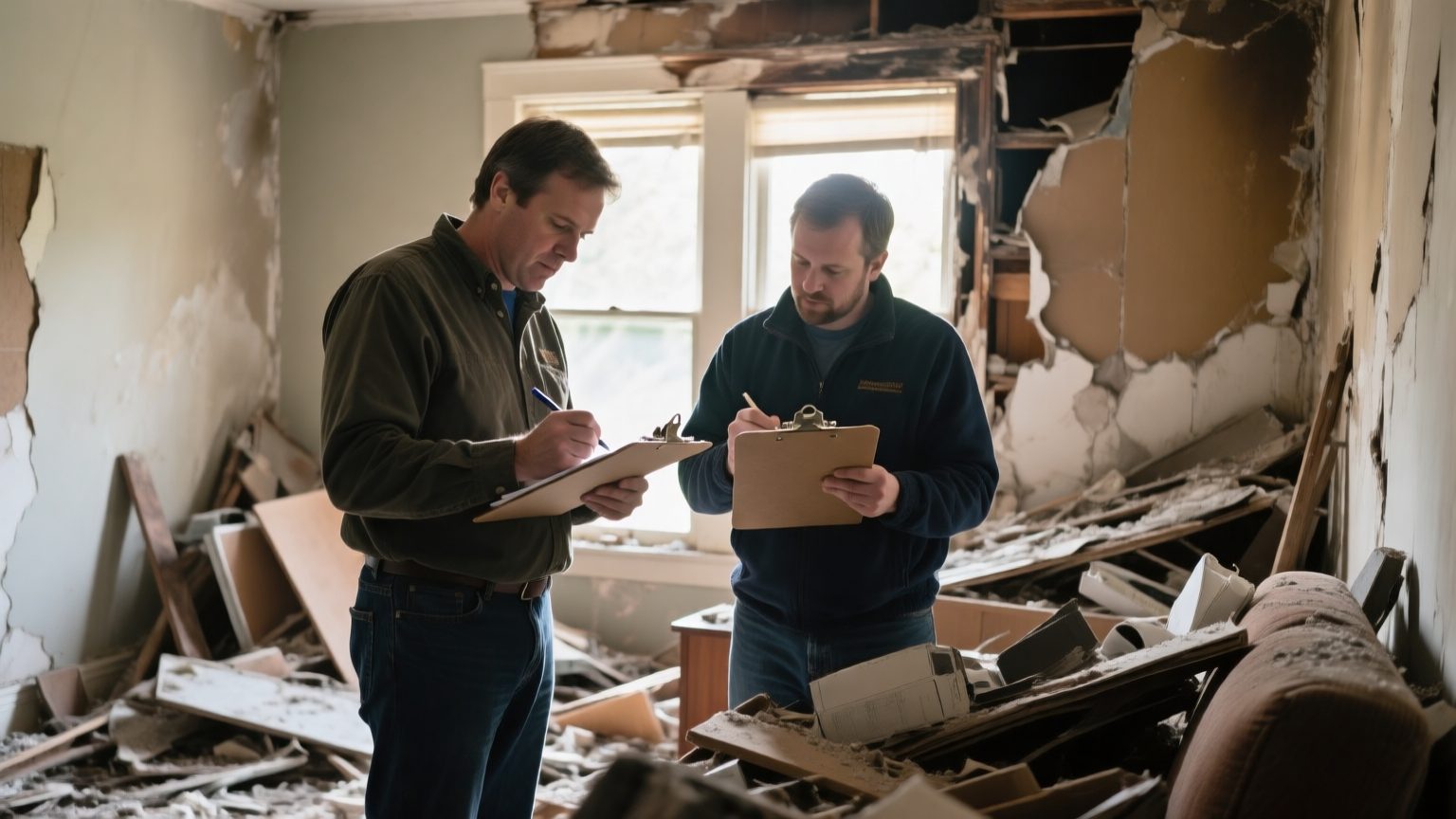
A large or catastrophe loss is rarely documented by one person. Several adjusters, field techs, and processors work the same claim or the same event at once, and each brings their own habits: one writes detailed descriptions, another abbreviates; one records condition, another leaves it blank; one prices from a national retailer, another from wherever the first search landed. Individually each is fine. Combined into one contents file, they produce a document that reads like it was written by five people, because it was, and that inconsistency is what a reviewer notices first.
The failure here is not effort or skill. It is the absence of a shared standard, and it compounds with volume. Here is why consistency breaks on a multi-adjuster loss, the specific elements that have to be captured the same way every time, and how to enforce a standard without slowing anyone down.
Why consistency breaks on a multi-adjuster loss
Three forces pull a large-loss file apart. The first is descriptive drift: the same item gets three different names, so a reviewer cannot tell whether they are looking at duplicates or distinct property. The second is grading drift: without a shared condition scale, one adjuster's "good" is another's "fair," and depreciation ends up applied inconsistently across a single claim. The third is evidence drift: some lines carry a priced source and others carry a bare number, so the file's defensibility is uneven, and a reviewer's confidence drops to the level of its weakest lines.
On a small claim any of these is a minor cleanup. On a two-thousand-item catastrophe loss they multiply into a file nobody can reconcile, which is exactly the backlog problem worked through in how to process a 2,000-item contents inventory after a catastrophe without a backlog. Consistency is not a finishing touch on volume work; it is the thing that makes volume work reviewable at all.
The elements that must be captured the same way
Consistency is achievable because the elements that drift are a short, fixed list. Standardize these and the file holds together regardless of who documented which room.
| Documentation element | The inconsistency risk | The standard to enforce |
|---|---|---|
| Item description | Same item named three ways | Description, brand, model, quality tier in fixed fields |
| Condition grade | One person's "good" is another's "fair" | One shared condition scale used by everyone |
| Age basis | Exact date, guess, or blank, mixed | Age with a stated basis, or an honest bracket |
| Replacement cost source | Some lines sourced, some bare | A retailer source attached to every line |
| Quantity and duplicates | Same item counted in two rooms | One reconciliation pass before finalizing |
Every row is a decision made once, at the standard-setting level, instead of a hundred times by individual judgment. That is the difference between a file that reads as one document and one that reads as five.
Set one item schema and one condition scale
The foundation is a shared schema: the exact fields every item must carry, in the same order, no matter who enters it. Description, brand, model, quality tier, quantity, age, age basis, and condition. When the fields are fixed, the descriptive drift largely disappears, because there is a defined place for each piece of information rather than a free-text box that invites five styles.
Alongside the schema, publish one condition scale and require it, for example new or barely used, good with normal wear, fair with visible wear, and poor. A shared scale is what keeps depreciation consistent across the claim, because the condition input that feeds it means the same thing on every line. The mechanics of how condition and age feed depreciation are covered in what replacement cost value (RCV) means, and the reason consistency matters is that a reviewer applying the carrier's depreciation schedule needs the inputs to be comparable across the whole file. Standardizing this across a team is the same discipline described in what to standardize in contents documentation across crews.
One evidence standard and one review queue
The second half of consistency is enforcement at review, not just at entry. Set a single evidence standard, every line carries a replacement cost with a source attached, and route every adjuster's work through one review queue rather than letting each person finalize their own rooms. A single queue is where duplicates across rooms get caught, where the condition scale gets checked, and where a line missing its source gets sent back. This is also where a total-loss situation, in which items must be reconstructed from memory and partial evidence, gets held to the same standard as the rest of the file; the approach for that is in how to document contents after a fire. Independent guidance from bodies like the Insurance Information Institute and disaster-recovery resources at USA.gov consistently stress detailed, itemized records, and a single review queue is how a multi-person team actually delivers that consistently.
Where AI enforces consistency without adding work
A shared standard only helps if people actually follow it, and on a fast-moving CAT loss the standard is the first thing that slips under pressure. This is where AI-assisted documentation earns its place: it structures every item into the same schema automatically, applies the same condition and quality fields to every line regardless of who supplied the input, flags duplicates across rooms and adjusters, and attaches a priced source to each value. The consistency is enforced by the structure rather than by asking each person to remember it. A professional still reviews and signs off, so judgment stays human, but the file arrives at review already uniform. That keeps the standard from depending on discipline under pressure, which is exactly when human consistency is hardest to maintain across a high-volume workflow like the one in handling contents claims after a catastrophe. It is contents valuation and documentation support that complements the packout and restoration operations already running, not a replacement for them, and it is not a public adjuster.
How Contensure helps
Contensure is AI-powered contents claim valuation and documentation that turns each adjuster's photos, item lists, spreadsheets, and claim files into one consistently structured contents file: the same fields, the same condition and quality capture, duplicate flags across rooms, and a retailer source on every value, all routed through one professional review queue. AI drafts, professionals review. It complements packout and restoration workflows rather than replacing them. See more on the Contensure blog, read how Contensure handles security, or talk to Contensure about standardizing a large-loss file.
This article is informational and not legal or insurance advice. Your policy language governs how contents values and depreciation are calculated and paid on a specific claim.