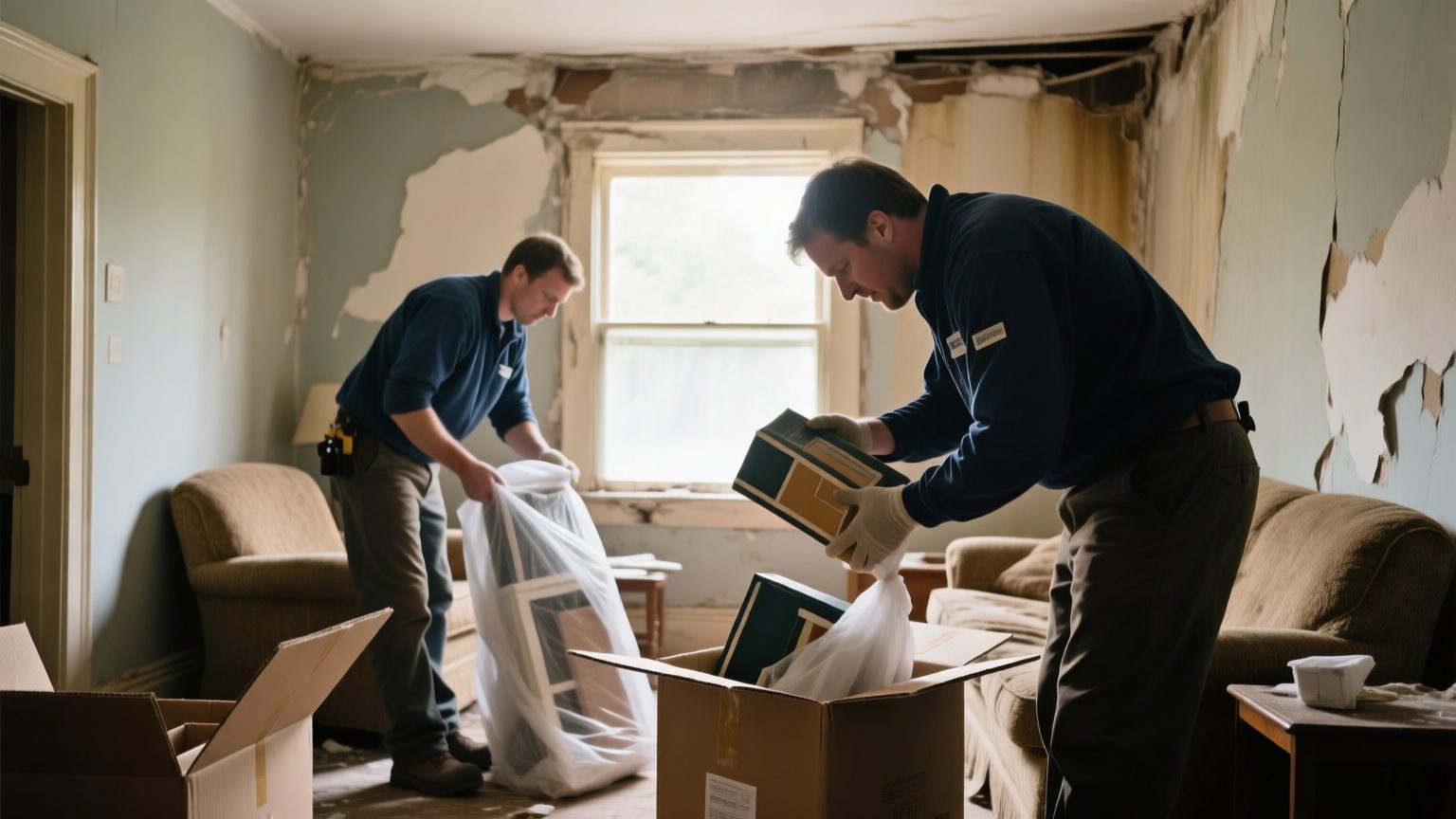
Why documentation feels like it competes with the packout
A restoration crew is measured on speed: get contents out of a damaged structure before secondary damage sets in, protect them, and move to the next job. Documentation feels like the thing standing in the way, because the version everyone remembers is a technician stopping to type item descriptions and hunt for prices while boxes wait. That is a real cost, and it is why some teams under-document and then pay for it later when the contents portion of the claim stalls in review.
The mistake is treating capture and valuation as one task done at the truck. They are two tasks with very different speeds. Capture is physical and fast. Valuation is research and belongs off-site. Once you split them, the packout stops competing with the paperwork.
Capture at packout: fast, structured, and complete
The field job is to record what leaves the property in a way that can be valued and reviewed later, not to price anything on the spot. The Institute of Inspection Cleaning and Restoration Certification treats documentation as a core part of a professional packout, and adjusters expect it to be there. Per guidance on what adjusters expect during a professional packout, the record should let someone who was never on site understand each item.
Capture these fields as the crew works, most of them from a photo:
| Field | Captured at | Why it matters later |
|---|---|---|
| Photo of the item and any label | Packout | Drives identification, brand, and model |
| Quantity | Packout | Multiplies the value; easy to miss on grouped items |
| Pre-loss condition and age | Packout | Needed for depreciation and ACV |
| Disposition (restore, replace, dispose) | Packout | Separates cleanable from total-loss items |
| Room or source location | Packout | Keeps the inventory organized and de-duplicated |
None of that requires stopping to price an item. It is the same work a careful crew already does, captured in a structured way so the next step is possible. The fuller method for capturing contents at packout so the values survive later scrutiny is covered in how to document contents after a fire.
Valuation after: where the time actually goes
Pricing hundreds or thousands of items is the slow part, and it does not belong on the job site. Off-site, each captured item needs a current replacement cost value from a real retailer, with the source recorded so it can be checked. That is the figure the contents claim is built on, and getting it right item by item is what separates a claim that moves from one that bounces. If replacement cost value is unfamiliar territory for the team, what replacement cost value (RCV) means lays out the basics.
This is exactly where automation earns its place without touching the crew's pace. Contensure takes the photos and lists captured at packout and drafts the item descriptions and replacement cost values, with the evidence attached: the matched product, the backup data, and the retailer the price came from. It assists with identification, valuation, and documentation. It does not run the packout, and it is not a packout tool; it works alongside your field process and handles the research-heavy documentation side after the truck has moved on. Your team reviews and signs off before anything is final, because AI drafts and professionals review.
The workflow that keeps both fast
Put together, the sequence protects the packout speed and the claim quality at once:
- Crew captures each item with a photo, quantity, condition, and disposition as they pack.
- Those inputs, messy as they are, feed the valuation step off-site.
- Replacement cost values are drafted with sources attached, item by item.
- A professional reviews the drafted values and documentation before submission.
- The review-ready package goes to the carrier with evidence behind every number.
The crew never waits on pricing, and the claim never goes out thin. For high-volume operations, this split is also what lets documentation keep up when several large jobs land at once, since the field bottleneck is decoupled from the research bottleneck. Contensure complements the packout and restoration workflow you already run rather than replacing any part of it, and the data captured is handled with care, described in how Contensure handles security.
This split matters most when volume spikes. During a catastrophe response, when several large jobs land in the same week, a team that prices in the field falls behind fast, because every crew is also a bottleneck at the valuation step. When capture and valuation are separated, the field crews keep clearing properties at full speed while the research-heavy valuation runs in parallel off-site and scales independently. That is how a high-volume operation keeps the contents side of many claims moving through a surge instead of watching a backlog build. Contensure is built for that large-loss and catastrophe contents processing, and it plugs into the workflow you already run.
What this changes for the operations manager
For a restoration operations manager, the practical win is that documentation stops being a trade-off against throughput. You do not choose between a fast packout and a defensible contents claim; you get both by putting the fast physical capture in the field and the slow valuation research after. That also makes crews easier to train, because their field job is simply to capture completely, not to become pricing researchers. More guides on contents documentation and valuation are on the Contensure blog, and teams that want to see the valuation step on their own claims can talk to Contensure. This is informational and not legal or insurance advice; your policy language and the carrier's requirements govern each claim.