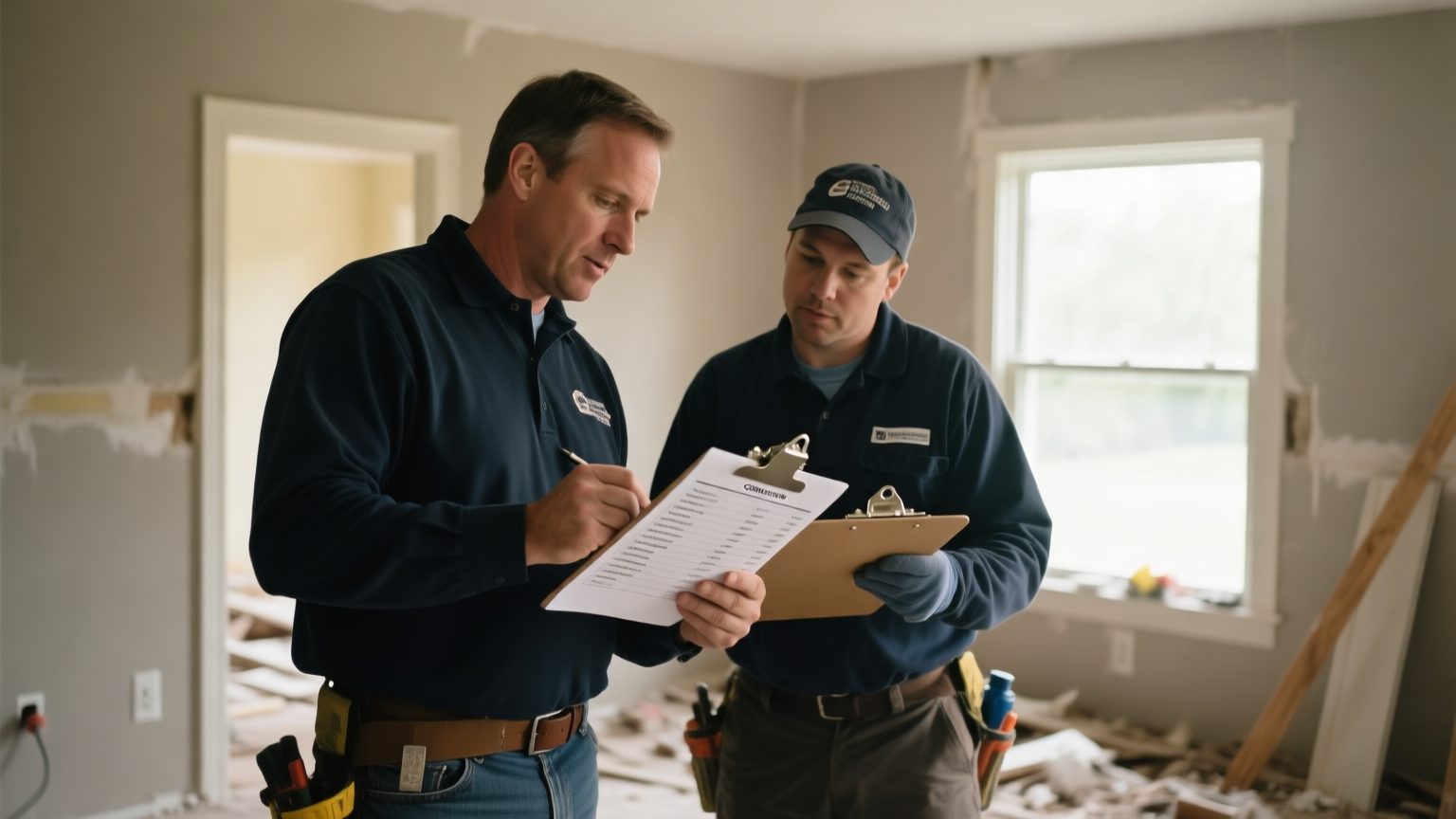
Most restoration companies value contents differently on every job, because the process lives in the head of whoever happens to work the claim. One estimator lists a television as "TV, $400," another finds the exact model and its current retail price with a link, and a third leaves the line blank for the office to research later. When a carrier reviewer opens those three files, only one holds up without questions. The fix is not more effort per claim. It is a repeatable standard that produces the same defensible output no matter who does the work.
What makes a contents valuation "defensible"?
Defensible does not mean high. It means a reviewer can look at a value and see exactly why it is what it is, without a back and forth. A defensible contents line has five things: the item identified specifically, a replacement cost value at like kind and quality, the source the price came from, the age and condition that drive depreciation, and a professional sign-off. Miss any one and the line becomes a question.
Get the insurance terms right, because a standard built on loose definitions produces loose values. Replacement cost value (RCV) is what it costs to replace an item with a new one of similar kind and quality at today's prices, before depreciation. Actual cash value (ACV) is RCV minus depreciation for age and wear. Many policies pay the ACV first and release the remaining recoverable depreciation after the item is replaced and proof is submitted. Your policy language is what governs how and when RCV is paid, so the standard documents the value and the evidence, and lets the policy decide the payout. A fuller explanation of [what replacement cost value (RCV) means](https://www.contensure.com/blog-what-is-rcv) is worth handing to every new crew member.
Why a restoration company needs a repeatable standard, not ad hoc work
Documentation quality is the single most important variable in whether a contents value clears review. An inventory with specific descriptions, current pricing, and a source behind each number is far easier for a carrier to approve than an undocumented list. When each estimator improvises, quality swings job to job, some claims sail through and others bounce back for rework, and the job board stalls waiting on the slow ones.
A written standard removes the swing. Every claim gets the same identification depth, the same evidence, the same review step, so the output is predictable and the send-backs drop. That predictability is what lets a restoration operations manager commit to turnaround times and keep the packout schedule moving instead of waiting on contents research. It also complements the field documentation your crews already capture, rather than adding a parallel process.
The five parts of a defensible contents valuation standard
A usable standard is specific about what each line must contain. This is the core of it.
| Standard element | What it specifies | Why it holds up in review |
|---|---|---|
| Item identification | Brand, model or a clear equivalent, quantity, and category, not just "TV" or "chair" | A reviewer can match the item to the price |
| Replacement cost value | Current price for the same or a like-kind-and-quality item, including tax and shipping where they apply | The value reflects what replacement actually costs today |
| Evidence | The retailer or source the price came from, captured with the line | The number is checkable, not asserted |
| Age and condition | Documented so depreciation is applied fairly and consistently | The ACV and recoverable depreciation are supportable |
| Professional review | A named person checks and signs off before the file goes out | Judgment calls and exceptions are owned by a human |
Write each element as a checklist item a crew can follow, not a principle they have to interpret. The point is that two different estimators, given the same photos, produce the same defensible line.
How to roll the standard out across crews
A standard only works if it survives contact with a busy job board. Put the identification and photo requirements into a template so field capture feeds the valuation directly, set one shared source of truth for how items are described, and route every claim through a single professional review queue before it leaves the building. Train once on the terms and the checklist, then let the template enforce them. This is the same discipline behind [standardizing contents documentation across restoration crews](https://www.contensure.com/blog-standardize-contents-documentation-across-restoration-crews), and it is what turns a good estimator's habits into the whole company's baseline. For total-loss fire work, where there is often nothing left to photograph, the standard has to lean harder on records and reconstruction, which is why a specific approach to [documenting contents after a fire](https://www.contensure.com/blog-document-contents-after-fire) belongs inside it.
Where AI fits, and where professionals stay in control
Contensure is built to run this standard at volume without changing who is in charge of it. It reads photos, item lists, spreadsheets, PDFs, and claim files, drafts specific item descriptions, researches replacement cost values from real retailer data, and attaches the source evidence to each line, so the identification, pricing, and evidence parts of the standard are produced in minutes instead of days. Your team then reviews and signs off. AI drafts, professionals review. It assists with identification, valuation, and documentation. It does not replace an adjuster or a public adjuster, it does not negotiate, and it never promises a higher payout.
It is also complementary to the tools you already run. It works alongside Xactimate and your packout and field-documentation workflows rather than replacing them, filling the contents valuation and evidence gap between field capture and a carrier-ready file. Because claim files and photos are sensitive, it matters [how Contensure handles security](https://www.contensure.com/security) as that data moves through the review workflow. More on building review-ready contents files is on [the Contensure blog](https://www.contensure.com/blog), and teams that want to see the standard applied to their own workload can [talk to Contensure](https://www.contensure.com/contact).
The goal of the standard is not to win an argument. It is a contents file a carrier can review without a fight: the right item, the right price, with the source behind it, checked by a professional. Neutral references such as the Insurance Information Institute's guidance on [creating a home inventory](https://www.iii.org/article/how-to-create-a-home-inventory) and on [how to file a homeowners claim](https://www.iii.org/article/how-to-file-a-homeowners-claim) reinforce the same point from the policyholder side, and the restoration-industry standards maintained by the [IICRC](https://iicrc.org/) give crews a shared vocabulary for condition and restorability. Build the standard once, and every claim after it inherits the credibility.