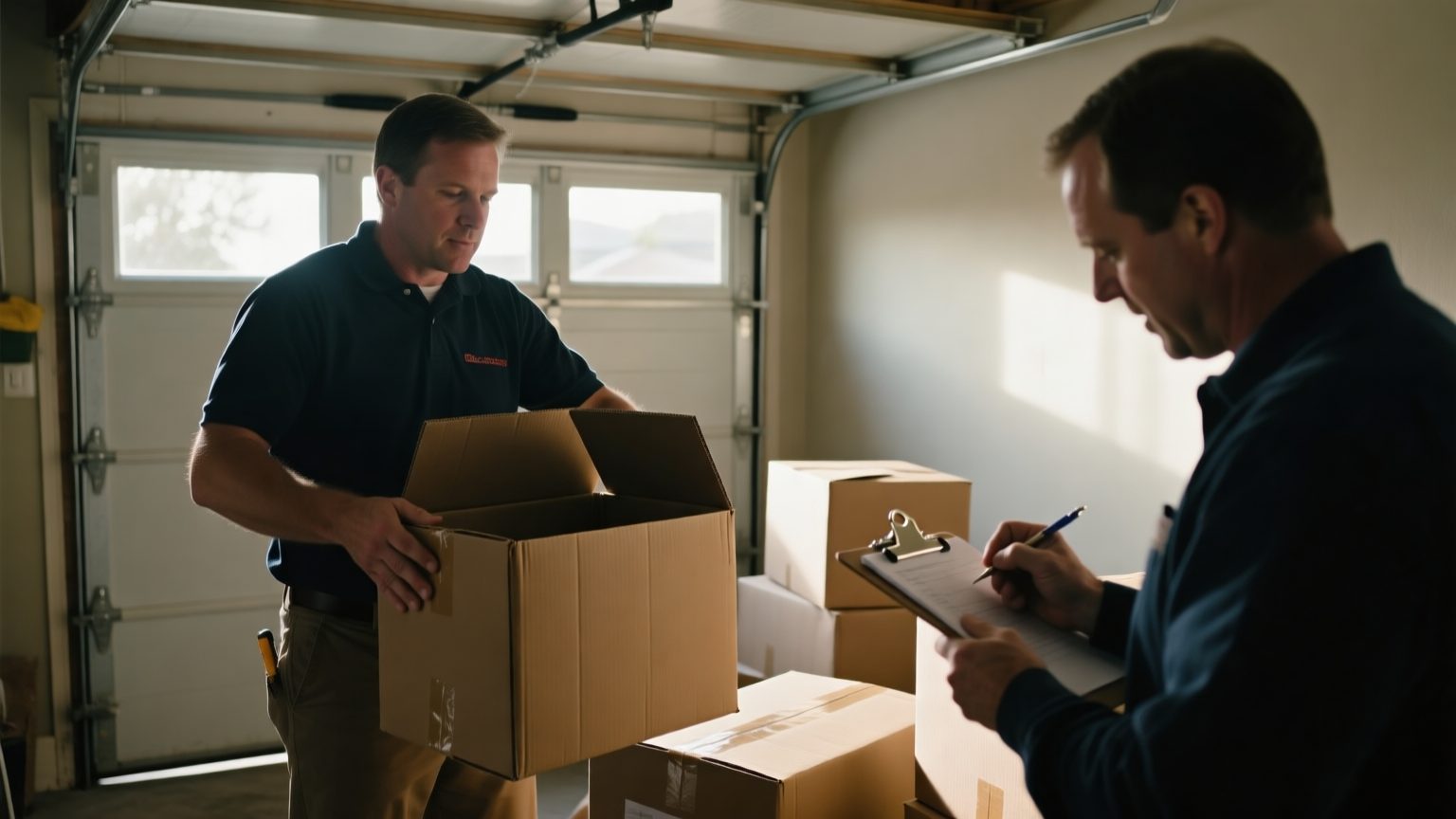
Why stored contents get missed or under-documented
A contents inventory usually focuses on the living space, where the damage is visible and the items are in daily use. But a large share of a household's property sits in secondary locations: the garage, the attic, the basement, a shed, or a rented storage unit. When a loss touches those spaces, the items there belong on the claim, yet they are the ones most often forgotten, under-described, or hard to prove after the fact because no one had a recent record of what was stored where.
Stored contents also tend to be the harder items to value: seasonal goods, tools, boxed keepsakes, spare furniture, and equipment that has been out of sight for years. The documentation method is the same item-by-item discipline used anywhere else, the approach in how to document contents after a fire, but stored property adds two questions a living-room inventory usually does not: can you prove the items were there, and does the coverage reach them.
Document location and ownership, not just the item
For contents in the main living area, presence is rarely disputed. For stored items, the where and the whose become part of the record. A box of tools in a storage unit needs the same description and value as one in the workshop, plus evidence that ties it to the insured and the location. Build each stored-item record with:
- A specific description: brand, model, size, and condition, the same detail that drives replacement cost value.
- The storage location: garage, attic, basement, shed, or a named off-site unit.
- Evidence of presence: photos, prior inventories, purchase records, or the unit's own records.
- Evidence of ownership where it is not obvious, especially for shared or inherited items.
- Quantity, age, and condition for the depreciation step, separate from the replacement cost.
The value itself is still replacement cost value, the cost to replace each item new of like kind and quality, explained in what replacement cost value (RCV) means. Stored items do not change how RCV is set; they raise the bar on proving the item existed and where it was, which is why capturing location and ownership at documentation time saves a dispute later.
The coverage question professionals should flag
Off-premises property is often covered differently from property at the insured location. Many homeowners policies limit coverage for personal property away from the residence to a percentage of the total personal property limit, commonly around 10 percent, or a set minimum, whichever is greater. Allstate's overview of insurance for contents in a storage unit describes this off-premises structure, and American Family's guidance on whether homeowners insurance covers storage units notes the same limits and covered-peril rules. A few implications follow.
| Consideration | What it means for stored contents | What to document |
|---|---|---|
| Off-premises limit | Away-from-home property is often capped at a percentage of the contents limit | The location of each item so the right limit is applied |
| Shared cap | The off-premises cap can cover all away-from-home property at once | A complete off-site inventory, not just the storage unit |
| Category sublimits | Jewelry, art, and similar categories may cap separately | Which items fall under a sublimit, wherever stored |
| Covered perils | Some perils, such as flood, are typically excluded | The cause of loss and whether the location was covered |
None of this is a valuation decision, and none of it is legal or insurance advice. It is a coverage question that a professional confirms against the policy, because a well-documented value on an item the policy limits differently is still a partial picture. Flagging the off-premises and sublimit questions early is part of building an audit-ready file rather than discovering the gap in review. Your policy language governs how off-premises coverage and sublimits apply.
Keep the stored inventory traceable
Stored contents are often numerous and repetitive, boxes of similar items, sets of tools, seasonal goods, so the risk is a value that cannot be traced back to a specific item and location when someone reviews it. The fix is the same traceability standard that keeps any large inventory reviewable, described in keeping every value traceable in a large-loss contents inventory: every value tied to an item, a description, a source for the price, and now a location. Traceability is what lets a reviewer accept a stored-item value without a round of back and forth.
Where AI helps, and where a professional decides
Stored contents multiply the volume, which is where an AI-assisted workflow saves the most time. Contensure reads photos, item lists, and claim files, drafts descriptions and replacement cost values with the source evidence attached, and keeps each value tied to its item, so a large stored inventory becomes a review pass instead of hours of manual research. It complements the packout and inventory tools a restoration team already uses rather than replacing them.
What stays with the professional is judgment: confirming ownership and presence where the evidence is thin, applying the coverage and sublimit rules to each location, and signing off on the final values. Contensure drafts and documents; people review and decide. It assists with identification, valuation, and documentation, it is not a public adjuster, and it does not replace professional judgment. Uploaded files are handled with care, described in how Contensure handles security. For more guides, browse the Contensure blog, or talk to Contensure about a specific workflow.