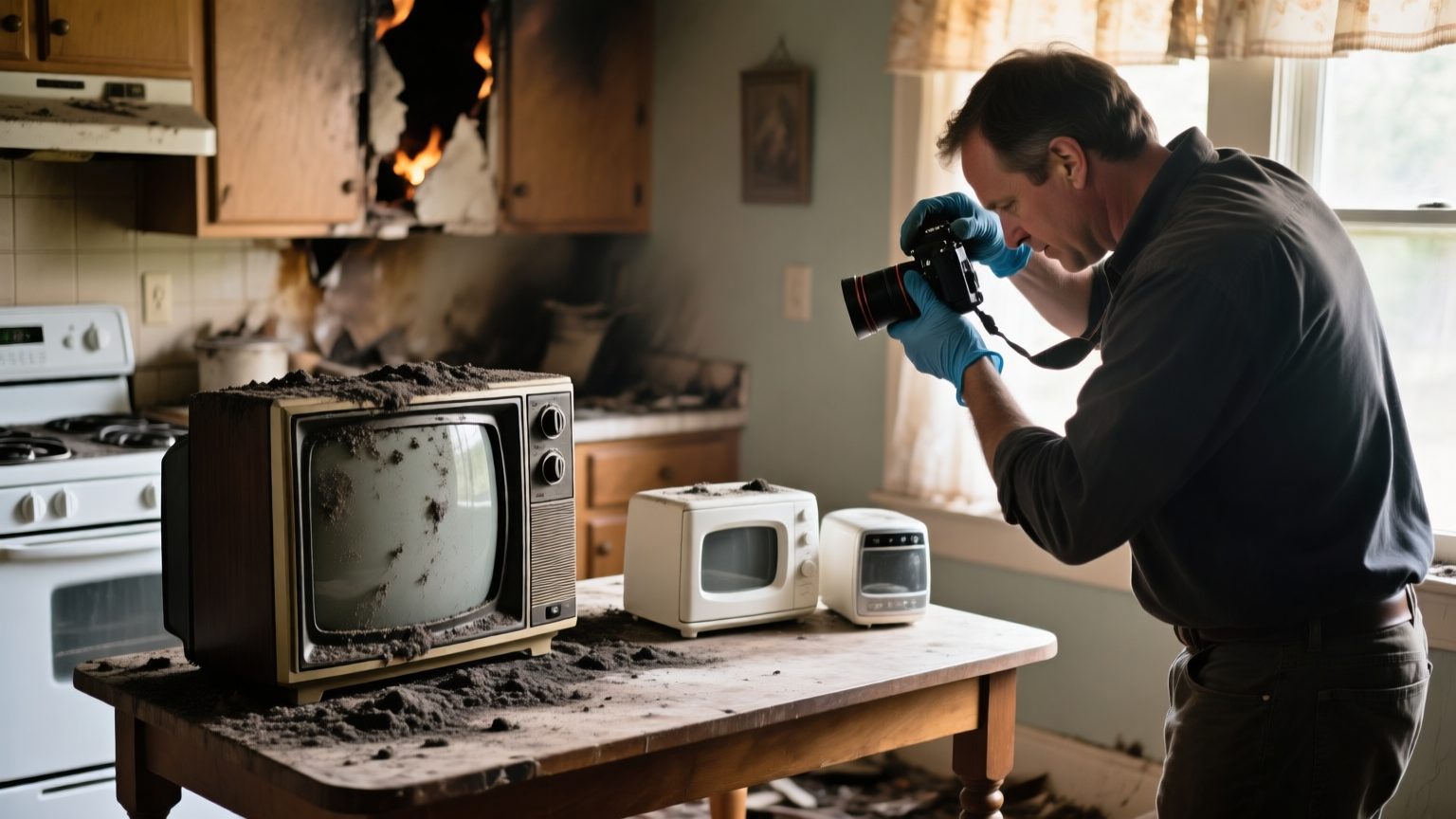
Electronics and appliances are the contents category most often argued over after a fire or smoke event, because a television or refrigerator can look intact, power on, and still be a covered loss. The damage is chemical and internal, it progresses for weeks, and it does not photograph the way a burned couch does. That gap between how an item looks and what has actually happened to it is exactly where contents values get questioned in review. Here is how to document these items so the value is defensible and easy to accept.
Why smoke-damaged electronics are a loss even when they still work
Smoke residue is not just dirt. Soot from a structure fire carries carbon, sulfur, and chlorine compounds, and when those settle on the metal inside a device and combine with ambient moisture, they form acids that attack the copper and tin used in nearly every circuit board. Restoration specialists who handle fire equipment note that this corrosion can begin within a day and that oxidation can render a board inoperable within a few days, with failures often appearing weeks or months after the fire. That delayed-failure risk is the single most important fact to capture in your documentation, because a reviewer looking at a device that powers on today needs to understand why it is still a loss.
The devices most exposed are the ones that pull air across their internals: televisions, laptops, and tablets around their vents and ports, game consoles and routers with cooling fans, and kitchen appliances like microwaves, coffee makers, and toasters where residue settles into heating elements and electronics. Manufacturers generally will not honor warranties on smoke-exposed units, and cleaning the outside does nothing about the residue already inside. Note all of this at the item level rather than as a blanket statement about the room.
What to record for each unit
A defensible electronics and appliance record is specific and evidence-backed. Capture the same fields for every unit so two reviewers reach the same conclusion.
| Field | Why it matters in review |
|---|---|
| Brand, model, and serial number | Identifies the exact unit so replacement cost is priced to like kind and quality, not a guess |
| Photos of residue, vents, and ports | Shows soot has reached the internals, not just the surface |
| Location in the structure | Ties the item to the smoke exposure and the loss |
| Age and condition before the loss | Supports the depreciation step for actual cash value |
| Note on internal corrosion risk | Explains why a working unit is still a loss |
Where the serial number plate survived, photograph it. Where it did not, capture the model from the housing and note that the serial is unavailable rather than leaving the field blank. The goal is a record a reviewer can check, which is the same standard that governs contents claims generally, laid out in how to document contents after a fire. The value of a specific, itemized record is why insurance educators such as the Insurance Information Institute recommend a detailed home inventory before a loss ever happens.
How to value each item at replacement cost
Once the item is identified, its value starts from replacement cost: the price to buy the same or a closely comparable unit new, today, from a real retailer, with that source recorded. Replacement cost value is the starting figure for each line, and depreciation for age and condition is what separates it from actual cash value. If you need the distinction in plain terms, it is covered in what replacement cost value means. For an electronics line specifically, price to the current equivalent when the exact model has been discontinued, because most consumer electronics are replaced by a newer version within a few years, and document that the priced unit is the closest available like kind and quality.
Do not state a payout figure or a depreciation percentage as a rule. Age and condition drive depreciation item by item, and how and when replacement cost is actually paid depends on the policy. The general mechanics of how carriers work through contents after a large event are outlined by the Insurance Information Institute's guidance on settling claims after a disaster. The defensible move is to attach the evidence and let the value stand on it, not to promise an outcome.
The documentation gap that stalls these claims
Most electronics and appliance disputes trace back to one of three gaps: a value with no retail source attached, an item described too vaguely to price accurately, or no explanation of why a functional-looking device is a loss. Close all three at documentation time. A line that reads "TV, $600" invites a question. A line that reads "Samsung 55-inch 4K TV, model and serial recorded, soot residue in vents photographed, priced to current comparable model at [retailer] with listing attached, internal corrosion risk noted" is easy to review and hard to argue with. That is the difference between a claim that moves and one that stalls in back and forth.
How Contensure helps
Contensure is built to close those gaps on volume. It turns photos, item lists, spreadsheets, and claim files into review-ready item descriptions and replacement cost values, with the retail source and comparable listing attached to every line, so the evidence behind each electronics and appliance value is there before anyone asks. It drafts the values in seconds and routes them through a professional review queue, so your team reviews and signs off before anything is final. It assists with identification, valuation, and documentation. It does not replace professional judgment, Xactimate, or your field packout workflow, and it is not a public adjuster. Because you are uploading claim files and photos, it is worth knowing how Contensure handles security, and you can always talk to the Contensure team about a specific large loss. More on the broader method is on the Contensure blog.