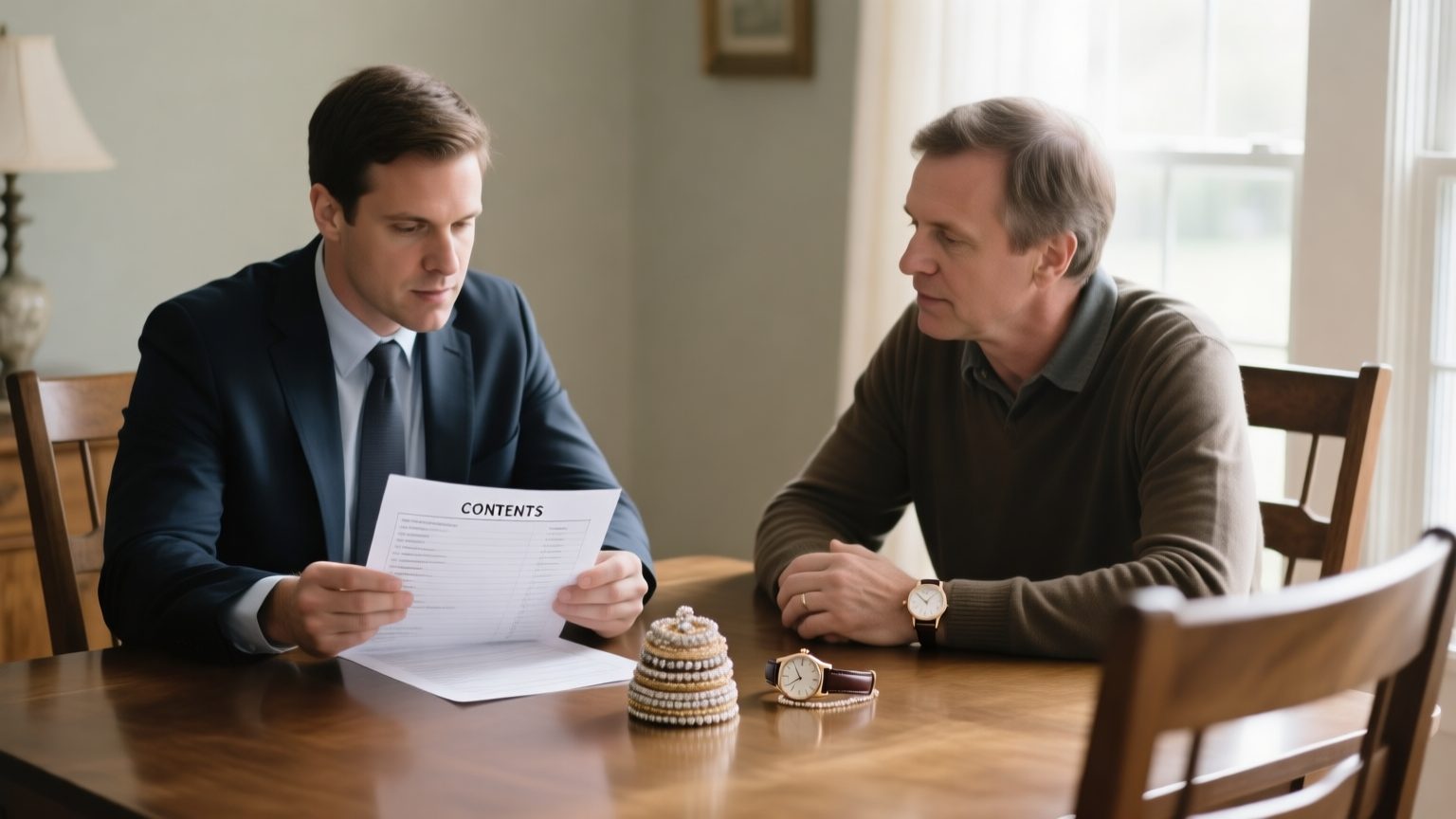
You can document a contents claim perfectly and still be surprised at settlement, because some categories have their own ceiling. A homeowner with a full contents limit can find that the jewelry lost to theft is capped far below the overall number, or that the coin collection has a limit measured in the low hundreds. These are sublimits, and they are one of the most misunderstood parts of a contents claim. The documentation job is not to move the cap. It is to categorize and describe items so precisely that the reviewer applies the correct limit to the correct peril, and so nothing that should have been treated differently gets lost.
What a sublimit is, and where it lives in the policy
A sublimit, often labeled a special limit of liability, is a cap the policy places on a specific class of property. It sits inside your overall Coverage C personal property limit, not on top of it, and raising the overall limit does nothing for these categories. In most homeowners policies the language appears in Coverage C under a heading like Special Limits of Liability, and the amounts are also reflected on the declarations page. The Insurance Information Institute's overview of what a standard homeowners policy covers describes how these category limits sit within personal property coverage. The specific caps and categories vary by policy and endorsement, so your policy language governs, but the structure is consistent across standard forms.
The categories that commonly carry a sublimit
Standard homeowners forms apply special limits to a recognizable set of categories. Typical examples, using common standard amounts that your own policy may differ from, look like this.
| Category | Typical standard limit | Peril note |
|---|---|---|
| Money, bank notes, coins, bullion, stored value cards | Around $200 | Applies broadly |
| Securities, deeds, manuscripts, passports, tickets, stamps | Around $1,500 | Applies broadly |
| Jewelry, watches, furs, precious and semi-precious stones | Around $1,500 | Limit commonly applies to theft only |
| Firearms and related equipment | Around $2,500 | Limit commonly applies to theft only |
| Silverware, goldware, platinumware, pewterware | Varies | Limit commonly applies to theft only |
The peril note is the part that trips people up. Several of these sublimits, jewelry, firearms, and silverware among them, commonly apply to loss by theft, not to every peril. That means a fire loss of jewelry may be handled under the broader contents limit rather than the theft sublimit, while the same jewelry stolen would be capped. Which peril caused the loss can change which limit applies, which is exactly why the documentation has to record the cause of loss clearly. The fire documentation side of this is covered in how to document contents after a fire.
Why categorization is the documentation problem, not the cap
No amount of documentation raises a sublimit. What documentation controls is whether an item is placed in the right category and matched to the right peril, so the correct limit is applied and nothing is quietly miscounted. This matters in three ways.
- Correct categorization. An item filed under the wrong category can be reviewed under the wrong cap. A watch is jewelry; a firearm safe may not be firearms; a collectible may or may not fall under a special limit depending on the policy. Precise descriptions let the reviewer apply the policy as written.
- Peril clarity. Because several sublimits are theft-only, the record has to make the cause of loss unambiguous, so a fire or water loss is not mistakenly capped under a theft sublimit.
- Identifying what should have been scheduled. High-value items above a category's limit are usually covered more fully only when separately scheduled, and clear documentation surfaces which items those are.
That last point connects to how higher-value property is handled in the first place. Items whose value exceeds a special limit are typically scheduled on an endorsement or floater, which is a different documentation path from ordinary contents, laid out in scheduled personal property vs unscheduled contents. Knowing which items sit near or above a sublimit tells you which ones the schedule should have covered, and a home inventory built before a loss is where much of that detail comes from.
What a reviewable sublimit-aware file looks like
A contents file that handles sublimits well does not argue about the caps. It presents each item so the reviewer can apply them cleanly: a specific description that makes the category obvious, the cause of loss recorded, a replacement cost value with its source, and any scheduled items flagged as scheduled. The evidence discipline that keeps any value reviewable is the same one behind what replacement cost value (RCV) means: a number with a source and a clear description is easy to review, and clarity on category and peril is what lets the sublimit rules resolve without back and forth. None of this is legal or insurance advice, and your policy language governs how each limit applies.
Where Contensure fits
Contensure is AI-powered contents claim valuation and documentation. It identifies and describes items, groups them into clear categories, drafts replacement cost values with the evidence attached, and flags high-value items that may sit near a special limit so a professional can confirm the categorization and whether an item was or should have been scheduled. It handles the valuation and documentation, and it routes everything through professional review. It does not interpret coverage or decide how a sublimit applies to a policy; that is the professional's and the carrier's role, and your policy governs. Because these files carry sensitive personal and financial detail, how the data is handled is described in how Contensure handles security. More on documentation is on the Contensure blog, and teams handling a large claim can talk to Contensure.